
Reinforcing Its Position as a Leading Digital Lifestyle and Loyalty Platform on the International Stage
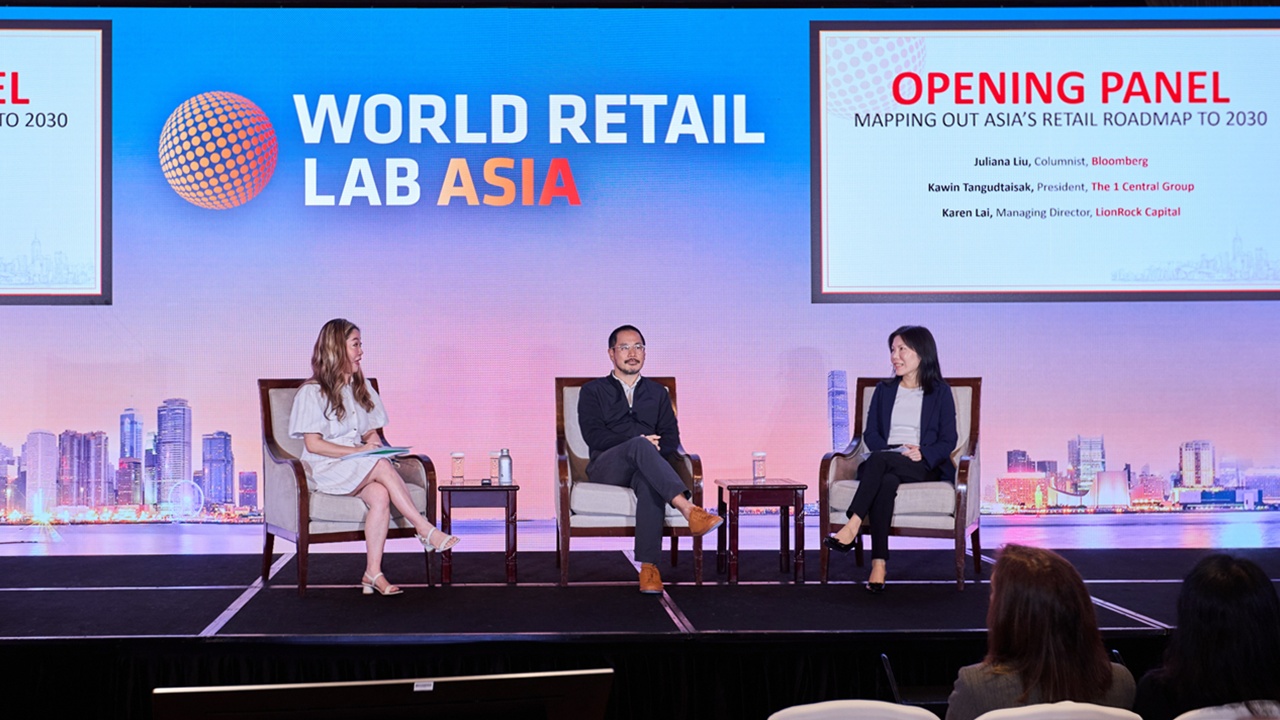
The 1 Central Group, Thailand’s No. 1 digital lifestyle and loyalty platform and one of Asia’s top five, participated in the opening panel discussion at World Retail Lab Asia 2026 in Hong Kong. Kawin Tangudtaisak, President of The 1 Central Group, shared perspectives from Thailand and Southeast Asia, highlighting four key megatrends expected to shape Asia’s retail landscape toward 2030. His insights emphasized a shift from sales-driven growth toward delivering meaningful customer value, leveraging technology strategically, and building enduring customer relationships. His participation further strengthened The 1 Central Group’s international presence, following its participation in the World Retail Congress in Berlin, Germany.
Four Key Megatrends Shaping Asian Retail Toward 2030

Kawin Tangudtaisak outlined four major trends redefining the future of Asian retail, emphasizing that success will no longer be measured solely by sales performance or business expansion, but increasingly by retailers’ ability to understand consumers, deliver meaningful value, and build lasting customer relationships amid rapidly evolving consumer expectations.
- Value Over Vanity: When Meaningful Value Matters More Than Brand Status
Consumer preferences are shifting from status-driven purchasing toward brands that deliver genuine value and meaningful experiences. Even affluent consumers and luxury shoppers, despite their ability to pay full price, increasingly seek exclusive privileges, rewards, and experiences that make them feel recognized and valued.
This shift signals that loyalty in the premium segment is no longer driven by discounts or promotional benefits alone. Instead, it is about fostering long-term emotional connections through personalized experiences that demonstrate a brand’s genuine understanding and appreciation of its customers.
- Wellness & Outdoor: From Emerging Trends to Everyday Lifestyles Driving Retail Growth
Health, wellness, and outdoor activities are evolving from temporary trends into integral parts of everyday life across Asia. Consumers are increasingly prioritizing preventive healthcare, active lifestyles, and experiences that enhance their overall well-being.
This transformation is creating new opportunities for retailers to rethink their products, services, and physical spaces to better align with changing lifestyles. Retailers that successfully integrate their offerings into consumers’ daily lives will be better positioned to build deeper engagement beyond traditional shopping transactions.
- The Silver Shift: Unlocking New Growth Opportunities Among Silver Spenders
Asia’s rapidly aging population is creating a significant new economic opportunity through the rise of Silver Spenders, a growing and increasingly influential consumer segment with strong purchasing power and diverse lifestyle aspirations.
To capture this opportunity, retailers must move beyond conventional products designed for older consumers and develop a deeper understanding of their individual preferences, particularly in health, comfort, security, and life experiences. Today’s mature consumers are not simply seeking convenience; they are pursuing active, fulfilling lifestyles and new experiences.
Retailers that leverage customer insights to develop relevant products, services, and personalized experiences will be well positioned to unlock sustainable growth from this emerging segment.
- AI as a New Utility: From Emerging Technology to Essential Business Infrastructure
As consumer expectations become increasingly diverse and dynamic, artificial intelligence is evolving from a competitive differentiator into a fundamental business utility, essential to both retail operations and everyday consumer experiences.
For consumers, AI is already influencing how they discover information, compare brands and products, and make purchasing decisions. For retailers, AI is driving greater operational efficiency through real-time forecasting, dynamic pricing, inventory optimization, and automated personalization, enabling businesses to anticipate demand, optimize resources, and deliver more relevant customer experiences.
Kawin emphasized that within the next three to five years, AI will fundamentally transform retail operations. The ability to analyze data, anticipate consumer behavior, and respond to customer needs in real time will no longer be merely a competitive advantage, but a baseline capability required for businesses to remain competitive.
However, successful AI adoption is not simply about embracing advanced technology. It requires businesses to identify clear challenges and apply AI strategically to generate tangible, measurable outcomes.
From Megatrends to Global Retail Perspectives: Balancing AI, Customer Value, and Human Connection

Beyond Kawin’s perspectives, World Retail Lab Asia 2026 brought together global retail leaders whose insights reinforced a common message: the future of retail depends not only on technological advancement, but also on the ability to adapt rapidly, deliver meaningful value, and strengthen customer relationships.
On technology and business agility, Kawin’s perspective on AI as a New Utility aligned with insights shared by Terry Li of Tencent Smart Retail, who highlighted that AI is advancing at a weekly pace while many retailers continue to operate on annual planning cycles. The challenge is therefore not simply keeping up with “China Speed” and “AI Speed,” but identifying the right business problems for AI to solve. As illustrated by the analogy of having a hammer, the real question is knowing which nail to hit to achieve the greatest business impact and return on investment.
From a consumer perspective, Kawin’s concept of Value Over Vanity resonated with views expressed by Scott Price of DFI Retail Group and Christina Zhu of Walmart China, who highlighted consumers’ growing demand for value, affordable indulgences or “treats,” and products and services that support health and well-being. These shifts reinforce the growth opportunities emerging from wellness-oriented lifestyles and the rising influence of Silver Spenders.
Meanwhile, Jamie Salter of Authentic Brands Group emphasized the importance of “Content Drives Commerce,” highlighting how compelling content and storytelling can strengthen brand engagement and influence purchasing decisions. He also underscored the importance of localization, adapting products, communications, and experiences to reflect the cultures and lifestyles of consumers across Asia’s diverse markets. This reinforces the growing importance of understanding local consumer differences as a key driver of international retail growth.
Despite the rapid advancement of technology, human connection remains at the heart of retail. This perspective was echoed by Jennifer Woo of The Lane Crawford Joyce Group, who emphasized that retail remains fundamentally a people-driven business. While technology can improve efficiency and convenience, it cannot replace authenticity, empathy, and meaningful relationships between brands and customers.
Collectively, the perspectives shared at World Retail Lab Asia 2026 point to a defining shift in the future of Asian retail: success will not be determined by who adopts the most technology or expands the fastest, but by those who can best leverage technology to understand consumers, deliver genuine value, and build enduring customer relationships.
For The 1 Central Group, this direction closely aligns with its vision, “Redefining Loyalty into Enduring Relationships,” which aims to transform loyalty beyond points accumulation and redemption into lasting customer relationships. By leveraging data, technology, and customer intelligence, The 1 Central Group continues to connect brands and consumers through meaningful engagement, reinforcing its position as a leading digital lifestyle and loyalty platform committed to helping shape a sustainable future for retail in Thailand and across Asia.

